
Formula and inputs
T = N / fₛ
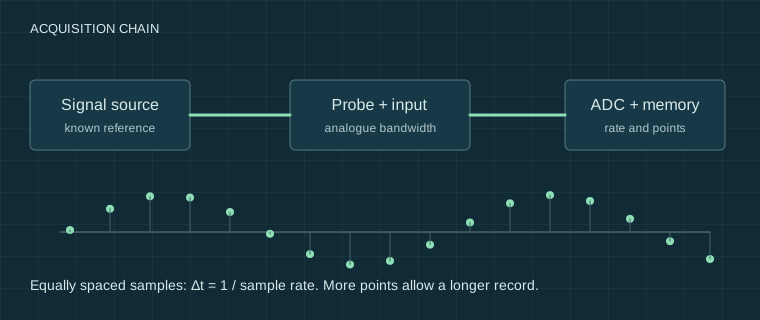
N is the number of samples stored per channel; fₛ is the actual sample rate in the chosen mode. SI prefixes here are decimal: k = 1,000, M = 1,000,000 and G = 1,000,000,000. The nominal capture window is N/fₛ; the first-to-last sample timestamp span is (N − 1)/fₛ.
Worked example
1 Mpoint ÷ 100 MS/s = 0.01 s = 10 ms.
What the model leaves out
Points are not bytes, display pixels or interpolated points. Memory may be shared between channels. A byte count cannot be converted without knowing sample storage and file overhead. Segmented memory, gaps between acquisitions and processing modes need separate treatment. Read the rate and point count from the actual capture.
Sources and their limits
These references support the principles described here. External tests remain the original authors’ work. Check the exact model manual before connecting equipment.
- Tektronix — XYZs of Oscilloscopes primer ↗Manufacturer primer: acquisition, triggering, probes and measurement systems; not a test of our instruments.
Reviewed for this edition on 22 September 2026. How we use evidence →